

Can AI design a custom website, and can it replace a web designer?
 By Miklós KazatsayPublished: 7 min read
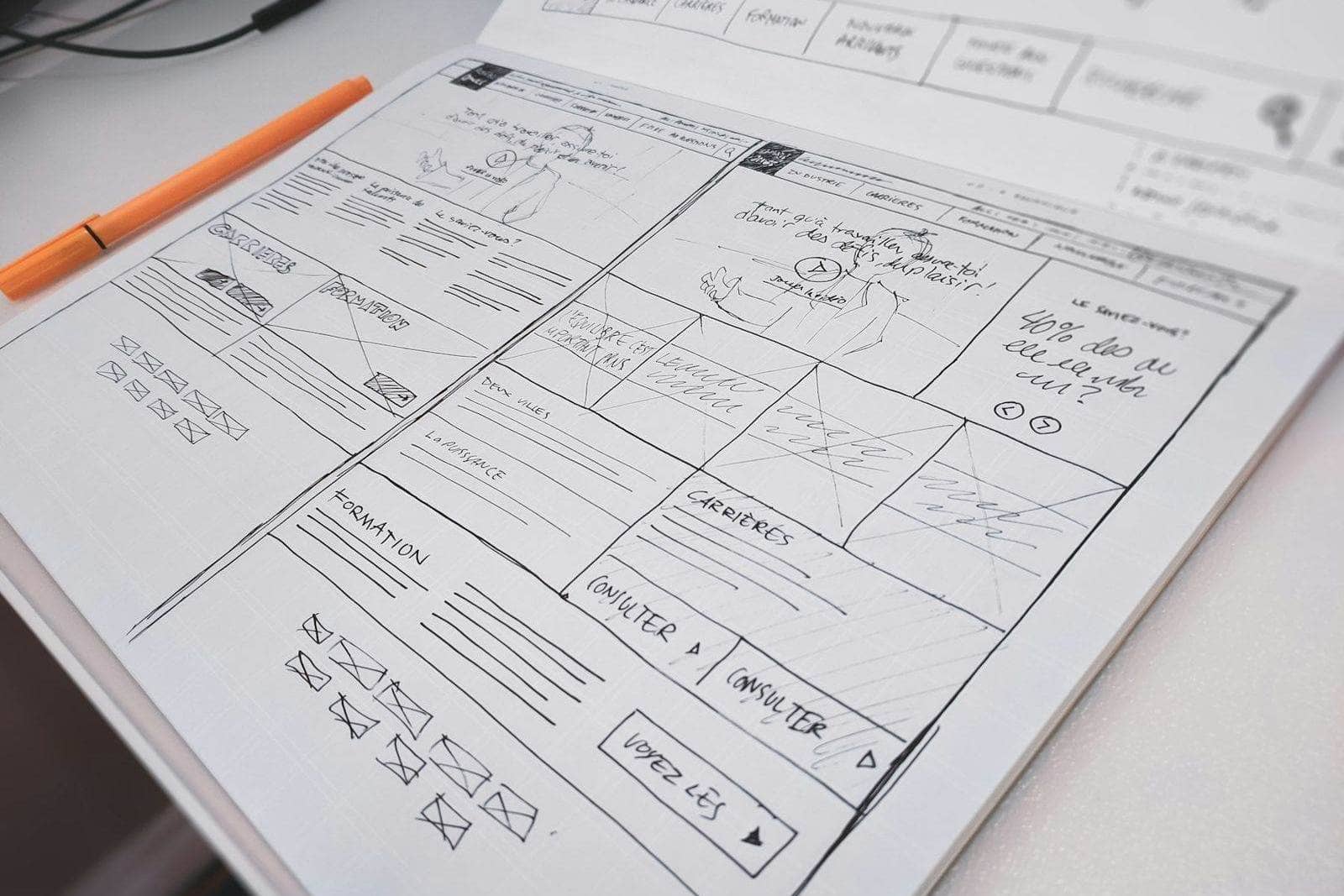
Yes, AI now produces a tidy, working website design, but not a custom one on its own. A custom web design starts from one firm's positioning, brand and real content, not a generic template. You must supply that, so AI suits a test page, but on a serious firm's site it's a designer's tool.
- A custom web design starts from a firm's positioning and real content, not from a visual style, so AI can't invent that input.
- Wix, Framer and Figma Make all give editable output, where hand refinement is part of the process, not a detour.
- In Nielsen Norman Group's 2025 test, AI screens without a distinctive visual language looked flat and interchangeable, while designs from detailed prompts came close to the human-made version.
- Google says using AI isn't against its rules in itself; the problem is mass-producing many pages that add no value.
- If you start with AI anyway, put a style reference and a real sketch in the prompt, not adjectives like “clean, modern”.
What does custom web design mean compared with a template?
A custom web design starts from one firm's positioning, brand and real content, not from a generic template. The difference isn't in the colours but in what the site claims about the firm and what backs that claim up. We set out the full decision framework in our comparison of AI site builders and custom design; this post stays with the design question.
That's why a Brizz website starts with positioning and isn't built from templates: our own service page describes it as custom design and development, without templates.
What does AI do well in web design today?
AI today quickly gives you a tidy layout, readable text blocks and working components that you can then edit. As of 19 November 2026, the vendors describe three well-known routes on their own pages like this:
- Wix: you describe what you want and the AI builder gives you a finished site, which you can refine further with its AI agent, Aria, or by hand, down to the last pixel. You set fonts and colours yourself.
- Framer: its AI agent creates editable pages, sections, copy and visuals in your project, and Framer says AI helps you move faster while you make the final design decisions.
- Figma Make: it starts from your codebase and design assets, or from scratch, and the output is code-backed and can also be edited visually.
In October 2025 the Nielsen Norman Group (NN/g) tested AI prototyping tools. When rebuilding an interface, a design generated from a detailed text prompt closely matched the human-designed version, though spacing and contrast problems remained. That's a UI test, not a site-builder test, but it shows where AI is strong: when you tell it precisely what you want.
What can't AI do unless you supply it?
AI can't invent positioning, real imagery or trust signals, so for an open-ended request it returns the most common pattern. NN/g says AI-generated screens that lack a distinctive visual language look flat and interchangeable, and it partly blames the defaults of component libraries. The same broad request came out very differently across tools.
Three things the machine doesn't bring because they aren't in the prompt:
- Positioning: who the site is for, what it promises and why that's believable. A person has to say it.
- Real imagery: NN/g advises against AI-generated images in final designs, because user trust can drop if people notice.
- Checking: hierarchy, grouping, contrast and spacing. NN/g says to rely on human judgment for those.
„The real work of design remains in the judgment, empathy, and intent that only human designers can provide.”
Can AI be used instead of a web designer?
AI can stand in for a web designer when the goal is a quick test or a holding page, not setting the firm apart. If the site has to bring trust and enquiries, the designer's decisions (positioning, images, the route to getting in touch) are where its value lies. Both extreme claims overstate it: NN/g's 2025 review found designers aren't yet in danger of being replaced by AI, and AI sites aren't all rubbish.
| Situation | An AI builder is enough | You need a designer |
|---|---|---|
| A test or pre-order page | Yes, in minutes | Not needed |
| A page for a single event | Yes | Not needed |
| An expert firm whose product is trust | Good for a draft | Yes, because of the positioning |
| It has to fit an existing brand | Only if you supply the frame | Yes, to protect the brand |
| It has to grow later: integrations, new languages | Depends on the platform; check export first | Yes, if you own the code |
The US Bureau of Labor Statistics projects, in its outlook updated on 27 August 2026, that employment of web developers and digital designers will grow 5 percent from 2025 to 2035, from 220,100 jobs in 2025. It also says that growing use of AI may soften that growth, though these tools may make the workers more productive. That's US data and doesn't transfer to Hungary, but it suggests the profession is changing, not disappearing.
What is AI good for in a designer's hands?
In a designer's hands AI speeds up ideation, sketches and trial versions, and takes none of the decisions. NN/g recommends the same: ideation, proofs of concept and rapid prototypes for usability tests. The principle is the same at Brizz, as we set out in our knowledge-base article on AI-enabled agencies: AI speeds up the background processes, and what the market sees is made by people. The Brizz team built brizz.hu in code, not with a site builder; the details are in the pillar post linked above.
„AI speeds up the execution, but what your website should say about you is something you have to know. If that isn't in the prompt, the machine returns the most common pattern.”
We didn't run these tools side by side for this post. What we say about capabilities comes from the vendors' own pages and NN/g's tests, as of 19 November 2026, and they change quickly.
What should you put in the prompt so the result isn't generic?
In the prompt, give a concrete style reference, a real sketch and a positioning claim, not generic adjectives. NN/g advises naming an established style or framework instead of “clean” or “modern”, and attaching a sketch, because higher-fidelity input gave more accurate results. Work through it like this:
- 1Write one sentence on who the site is for and what it promises that your competitor doesn't.
- 2Name one concrete style or framework as a reference, instead of adjectives.
- 3Attach your own sketch, wireframe or Figma frame, not just text.
- 4Add your own photos and real copy; don't leave them to the AI.
- 5Check hierarchy, contrast and spacing before you go live.
There's a fill-in prompt template for a one-page site in our step-by-step guide to building a one-page website with AI. If you skip the last two steps above, the site will be made with AI, but it won't be yours. Which of your pages is the one a client decides on without looking at the design?
Frequently asked questions
Can you build a professional website with AI?
Yes, if the professionalism comes from the input. In NN/g's test the detailed, specific prompt gave the best result, while a broad request gave very different and often generic output. A person checks hierarchy, contrast and spacing.
Does Google rank AI-made pages lower?
Not in itself. Google's guidance says generative AI can break its scaled content abuse policy when it's used to produce many pages without adding value for visitors. AI content should be manually checked for accuracy and trustworthiness before publishing.
Can I take an AI-built site to another host?
It depends on the platform. Wix's help centre says the site must run on Wix's servers, Framer doesn't offer HTML export for self-hosting, and Hostinger's AI Builder in agentic mode gives downloadable source code that can't be re-imported. The details are in our post on customising and moving an AI-built site.
If I just need a quick test page, which tool should I pick?
This post doesn't rank tools, because we didn't try them side by side. Check the chosen tool's help pages for what it lets you export and edit, and decide how tied to it you're willing to be.
Miklós KazatsayCo-founder – Operations & AICo-founder of Brizz. He runs how projects work and how AI tools are put to practical use, from brief to handover.
Drafted with AI assistance, edited and fact-checked by a human.
Sources
- Wix: AI Website Builder (viewed 2026-11-19)
- Wix Help Center: Exporting or embedding your Wix site elsewhere (viewed 2026-11-19)
- Framer: AI (viewed 2026-11-19)
- Framer Help: Can I export my website to HTML and self-host it? (viewed 2026-11-19)
- Hostinger: AI Builder agentic mode technical specifications (modified 2026-11-02)
- Figma: Figma Make (viewed 2026-11-19)
- Nielsen Norman Group: AI Prototyping (2025, last reviewed 2026-08-19)
- Nielsen Norman Group: AI Design Tools Are Marginally Better: Status Update (2025)
- Google Search Central: Using generative AI content (viewed 2026-11-19)
- U.S. Bureau of Labor Statistics: Web Developers and Digital Designers, Occupational Outlook Handbook (modified 2026-08-27)